Social Economy of Development in India by Chalam K. S
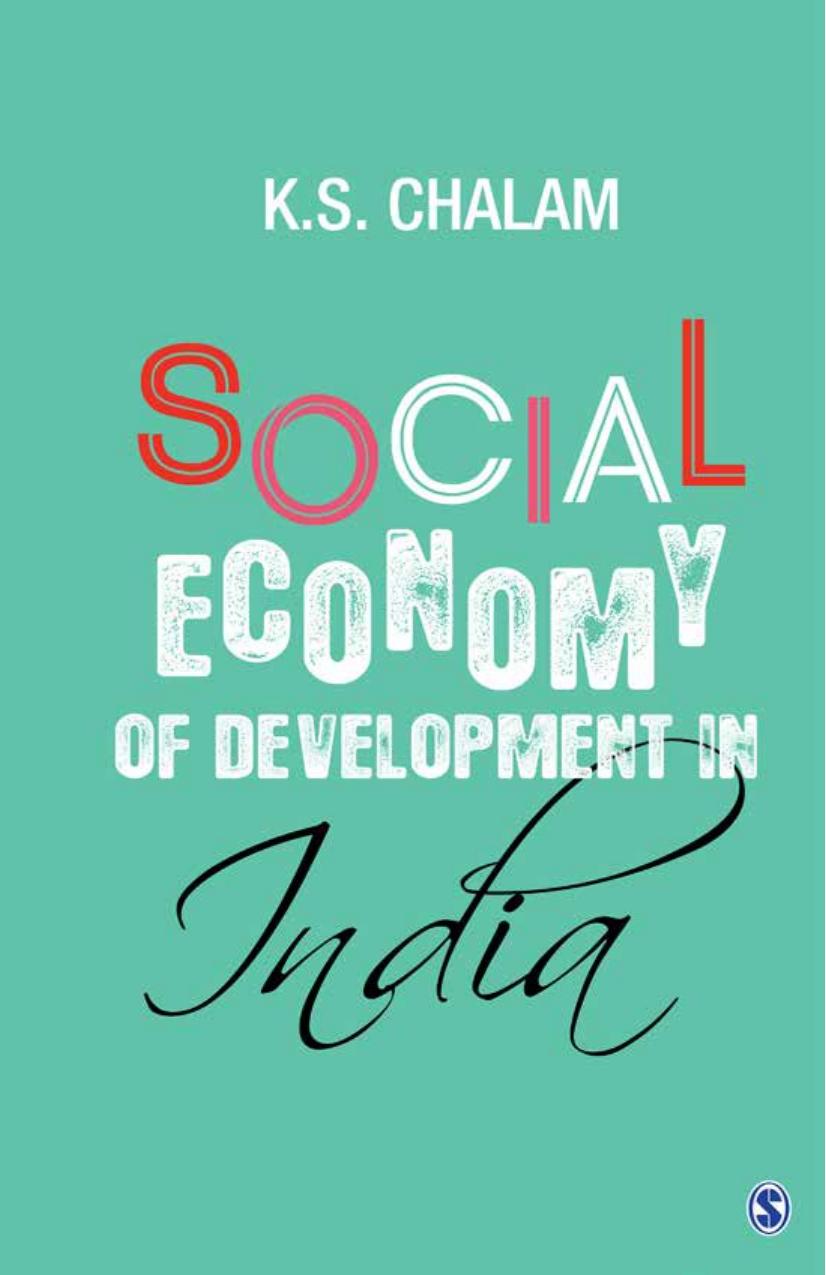
Author:Chalam, K. S.
Language: eng
Format: epub, pdf
Publisher: Sage Publications India Pvt, Ltd -- eBooks
7
Caste Prejudices and
Human Dignity
Human dignity as a notion appears to have been prevalent in all speculative philosophies of the human civilisation. Yet, there could be deviations from the basic idea of “all men are born free and equal in dignity,” from country to country, depending on physical conditions and metaphysical expositions. Thomas Paine’s remarkable book, Rights of Man,1 denounced by his contemporary Edmond Burke’s eloquent justification for inequity among humans, was a great leap forward in human social evolution. The French Revolution, the American War of Independence and subsequent developments further strengthened the longing for equity and justice grounded in the principle of common elements of existential conditions of man. Marxism and humanism, as distinct from capitalism and hedonism based on self-interest and development, respectively, have provided us with theories as to how we can attain harmony with nature and society. Different schools of thought in India have elucidated the need as well as methods for attaining liberation from the self and social bondages. Though there have been materialistic and humanistic philosophies prevailing in India, giving primacy to the existence of the human being rather than a supernatural force from the time of the Lokayatas in the ancient period and elaborated by D. P. Chattopadhyay, M. N. Ray, Rahul Sankrutyayan, Amartya Sen and several others, their views, however, were marginalised and suppressed in mainstream discourse. The conflict between the materialistic and idealist views of life and between alien and indigenous schools of thought is continued unabated, spilling over to contemporary disputes and occasional violence.
The idea of human dignity was articulated by social groups who have been marginalised and excluded from the mainstream development process in India. The intensity of the struggle for dignity has been more pronounced in the recent past due to global support for both the ideologies noted above. Globalisation and the expansion of capitalist development relying on efficiency, merit and ‘karma’ have strengthened the argument that men are intrinsically and metaphysically unequal and they are destined to be so. On the other hand, the popularisation of democracy and human rights as a part of the paradigm of dignity has secured the struggles of the oppressed and the marginalised. The two extremes of the contemporary situation in the world, particularly in the political economy of India, are creating social tensions. It is irony that those who have been advocating for a special identity for the country have joined hands with the global powers that uphold the principle of inequity (social and economic) as a natural process to espouse efficiency. This serious contradiction in our social life is being stifled by diverting the energies of the oppressed to mystical and devotional pursuits by those who oppose the victim’s intrinsic parity with others. This is possible in India where there is a structured and permanent institution of the caste system that sustains this contradiction due to the fact that there is a perpetual collective that works for their own self, interestingly with the resources of the deprived.
The situation can be interrogated within the framework of human dignity and rights.
Download
Social Economy of Development in India by Chalam K. S.pdf
This site does not store any files on its server. We only index and link to content provided by other sites. Please contact the content providers to delete copyright contents if any and email us, we'll remove relevant links or contents immediately.
International Integration of the Brazilian Economy by Elias C. Grivoyannis(111083)
The Radium Girls by Kate Moore(12040)
Turbulence by E. J. Noyes(8059)
Nudge - Improving Decisions about Health, Wealth, and Happiness by Thaler Sunstein(7715)
The Black Swan by Nassim Nicholas Taleb(7142)
Rich Dad Poor Dad by Robert T. Kiyosaki(6648)
Pioneering Portfolio Management by David F. Swensen(6307)
Man-made Catastrophes and Risk Information Concealment by Dmitry Chernov & Didier Sornette(6032)
Zero to One by Peter Thiel(5810)
Secrecy World by Jake Bernstein(4758)
Millionaire: The Philanderer, Gambler, and Duelist Who Invented Modern Finance by Janet Gleeson(4488)
The Age of Surveillance Capitalism by Shoshana Zuboff(4313)
Skin in the Game by Nassim Nicholas Taleb(4260)
The Money Culture by Michael Lewis(4215)
Bullshit Jobs by David Graeber(4204)
Skin in the Game: Hidden Asymmetries in Daily Life by Nassim Nicholas Taleb(4015)
The Dhandho Investor by Mohnish Pabrai(3778)
The Wisdom of Finance by Mihir Desai(3756)
Blockchain Basics by Daniel Drescher(3589)
